IN THE OPERATING SYSTEM:

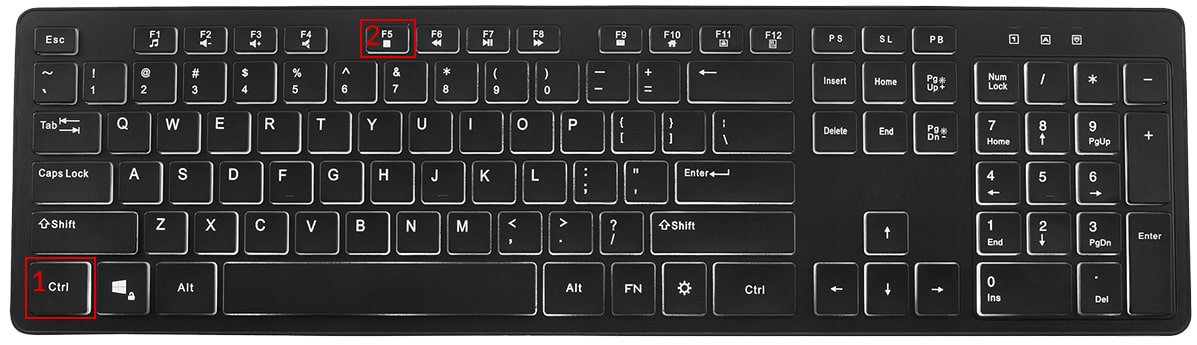
Hold down the key Ctrl, then press the key F5 Repeat this action at least 3 times
If this option does not work, try:
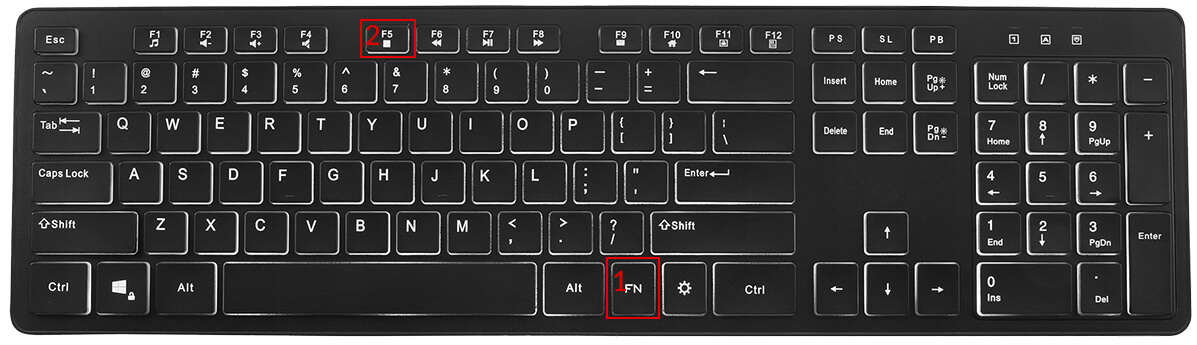
Hold down the key Fn, then press the key F5
Repeat this action at least 3 times
IN THE OPERATING SYSTEM:

For the Safari browser:
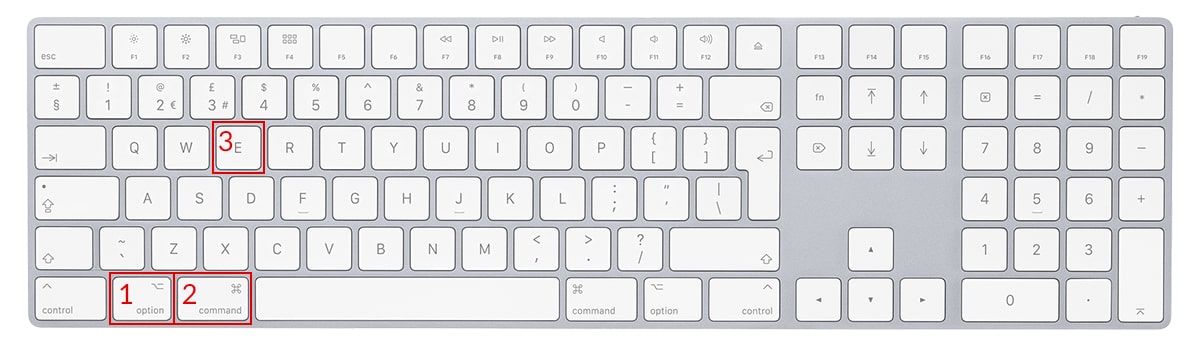
Hold down the key Option + Cmd(Command), then press the key E Repeat this action at least 3 times
For the Chrome, Firefox, Opera, Edge browser:
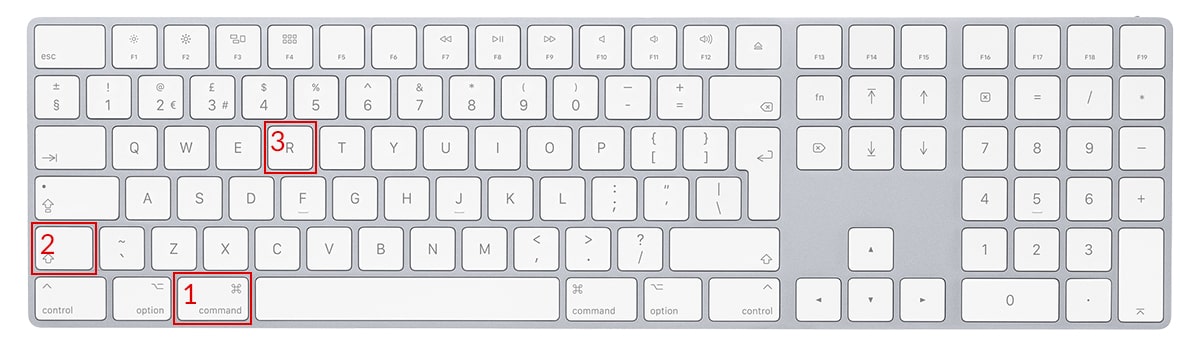
Hold down the key Cmd(Command) + Shift, then press the key R Repeat this action at least 3 times
A margin invoice is used to issue a sales document for travel services, used goods, antiques, works of art, and collectors' items. Such documents are issued by owners of travel agencies, car dealerships, and antique shops. The taxable amount for this document is the margin constituting the difference between the total amount to be paid by the purchaser of the goods and the purchase amount, less tax. On a standard VAT invoice, the entire net value is taxed.
The difference between a standard invoice and a margin invoice lies in the set of elements required on the document. In the case of the latter, only the commission charged by the seller is subject to taxation, and it does not include the tax rate or amount.
The afaktury.pl online invoicing program allows you to create a document which, with basic information about invoicing rules and knowledge of who should prepare such invoices, can be completed without difficulty.
The taxable amount for a sale documented by such an invoice is the margin charged by the seller, rather than the entire net value of the transaction. The margin on this document is the difference between the total amount to be paid by the purchaser of the goods or services and the purchase amount, less the amount of tax.
As a result, the seller pays only the tax on the margin charged when reselling the specific goods, while being unable to deduct VAT from invoices documenting the purchase of the resold goods.
From both an accounting and practical point of view, a margin invoice is equivalent to a bill. Such an invoice is not entered in the VAT purchase register. The entire amount paid to the seller is recorded as an expense.
To calculate VAT on the margin, the seller of goods or services first calculates the margin amount itself. It is the difference between the purchase price of the used goods concerned (such as a car) or services necessary to provide a travel service and the price at which the goods or services are sold. The difference is the gross margin amount. By then calculating the difference between the gross margin and the net margin, the seller obtains the amount of VAT that must be paid to the tax authorities.
Sales transactions involving goods and services for which the commission on the goods sold is taxable include:
A margin invoice documenting transactions belonging to the above categories does not show VAT amounts. Nevertheless, the seller of these specific goods and services is required to calculate VAT and pay it to the tax office.
The transfer of a fixed asset for personal purposes will not be taxable if there was no right to deduct VAT upon its acquisition. Thus, for example, withdrawing a car from business use will not result in the obligation to pay VAT.
Where the purchaser of travel services is a VAT taxpayer, the invoice must separately show the portion of the amount due to which the 0% VAT rate applies, which is the amount for services provided for the direct benefit of the traveler outside the territory of the European Union.

Margin invoices may be issued only by entrepreneurs who:
A document called a margin invoice is used by owners of antique shops and car dealerships. They purchase goods under a purchase and sale agreement that does not result in VAT being charged. Therefore, when selling a car, the owner of a dealership or antique shop cannot show input VAT and issue a traditional VAT invoice.
For such entrepreneurs, the taxable amount is the margin. It is calculated by subtracting the purchase amount of the goods or services from the selling price, and then reducing the result by the amount of VAT.
The difference between the invoices is that a margin invoice does not show VAT amounts and must also contain the appropriate wording, depending on the type of sale:
These annotations replace the document name “margin invoice,” which was required on the document until the end of 2012. Since the beginning of 2013, a margin invoice has not been required to contain any title.
Furthermore, a margin invoice does not include information about VAT rates and amounts such as:
It should be remembered that a margin invoice should contain the remaining information required for a VAT invoice, namely the invoice number, issue and sale dates, first names, surnames or business names of the contracting parties, addresses, and the tax identification numbers of the seller and purchaser.
An entrepreneur issuing a margin invoice does not have to provide information about the amount of the margin, even though it is the taxable amount. Such an invoice only needs to state the total amount due, both numerically and in words, as well as the method and due date of payment.

The legislator allows considerable freedom in the use of this type of invoice. People operating car dealerships, travel agencies, or trading in antiques may voluntarily choose this form of settlement or continue using regular VAT documents. They are not required to issue margin invoices.
Any entrepreneur who is a seller and opts out of the margin scheme and issues a standard VAT invoice charges and pays VAT on the full sales value. With their profit in mind, they will certainly set a higher selling price than in the case of a margin invoice.
The most important advantage for the seller is the lower amount of VAT that must be paid to the tax authorities. As standard, VAT is charged on the full sales value. For the purchaser, this means that when buying a car or other goods on the basis of a margin invoice, they cannot deduct VAT, even though the seller is obliged to pay it, and the total net amount, excluding VAT, constitutes a business expense for them.
The limitations concern warranties for electronic equipment. When buying a computer, phone, or other device on the basis of a margin invoice, the purchaser may encounter difficulties with warranty repairs. This type of document is used for the sale of used goods, so even if the equipment has not actually been used, the service center may refuse to repair it because the equipment is not formally new. Many manufacturers state in the warranty that it applies to new goods and may only be used by the first purchaser.
The regulations in force since January 1, 2014 exempt from tax the supply of goods used exclusively for tax-exempt activities if, due to the acquisition, import, or manufacture of those goods, the supplier was not entitled to reduce the amount of output tax by the amount of input tax.
Article 43(2), which currently reads: “ Used goods referred to in paragraph 1 point 2 shall mean movable property whose period of use by the taxpayer supplying it was at least six months after acquiring the right to dispose of those goods as owner,” will be deleted.
Since 2014, when selling a used item such as a car, computer, or furniture from which we did not deduct VAT because it had previously been purchased under a purchase and sale agreement or a margin invoice, and we do not charge VAT on the sale, then from January 1, 2014 it will no longer matter that we did not deduct tax on the purchase and used the item for more than 6 months.
Under the new regulations, VAT must be charged on the sale of used goods and movable property.
When purchasing used vehicles, a VAT margin invoice is often issued, which is characterized by the absence of VAT shown. Therefore, no deduction is available. The entire invoice value therefore constitutes the initial value of the fixed asset, which will be subject to depreciation.
Tax regulations do not allow VAT to be deducted on fuel purchased for a passenger car. We record the gross value from the invoice under expenses. VAT may be deducted on operating expenses for a company car, i.e. ongoing repairs, the purchase of parts, and the purchase of fluids or oil.
Following the amendment, it will no longer be possible for an asset to be used in business for more than six months and sold exempt from taxation due to its acquisition under a purchase and sale agreement. This means that if we decide to sell an asset after January 1, 2014, we will be required to subject it to VAT.
If an advance payment is received from the purchaser before the sale, the margin does not actually exist yet. In the case of such an advance payment, the seller issues a margin invoice, while the amount of the advance payment received will not be taxable. The invoice should only include the value of the advance payment received in the gross amount.
Upon receiving each subsequent advance payment toward the purchase of the goods, we issue the same document each time until the total value of the advance payments exceeds the purchase amount. Only then will a taxable margin arise. A difference will arise between the amount to be paid by the purchaser of the goods and the purchase amount.
The taxation rules for a margin invoice are specified in Article 120(4) of the Act on Tax on Goods and Services. The taxpayer may calculate the margin only when making the sale of the given goods or services, i.e. only when the difference between the total amount to be paid by the purchaser of the goods and the amount paid by the taxpayer upon acquiring them is known.
The legal basis for the accounting document known as a margin invoice can be found in the Act of March 11, 2004 on Tax on Goods and Services (Journal of Laws of 2004, No. 54, item 535, as amended). In the above Act, the provisions of Articles 119 and 120 of the VAT Act concerning the special VAT settlement procedure contain information allowing an entrepreneur to omit their margin from the invoice.
This means that the taxpayer may calculate the margin only when making the sale of the given goods or services, i.e. when the difference between the total amount to be paid by the purchaser of the goods and the purchase amount is known.
The data that should be included on this specific invoice are specified in the detailed invoicing rules and are contained in the provisions of the Regulation of the Minister of Finance of March 28, 2011, as subsequently amended.
The latest publication is the regulation of December 3, 2013, which entered into force on January 1, 2014 and specifies the cases in which invoices may contain a narrower scope of data than that provided for in the VAT Act (Article 106e).
The regulation also contains information on the method of converting amounts shown on invoices in foreign currencies used to determine the taxable amount; the scope of data in those currencies differs from that in Article 31a of the VAT Act.