IN THE OPERATING SYSTEM:

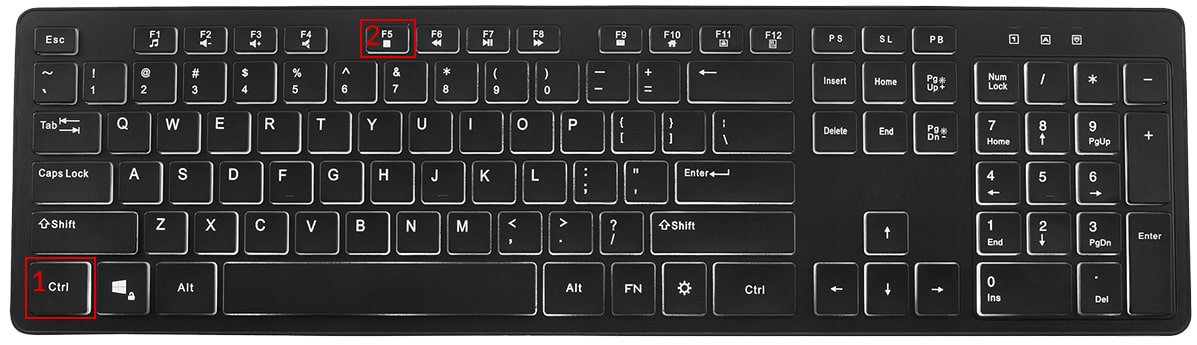
Hold down the key Ctrl, then press the key F5 Repeat this action at least 3 times
If this option does not work, try:
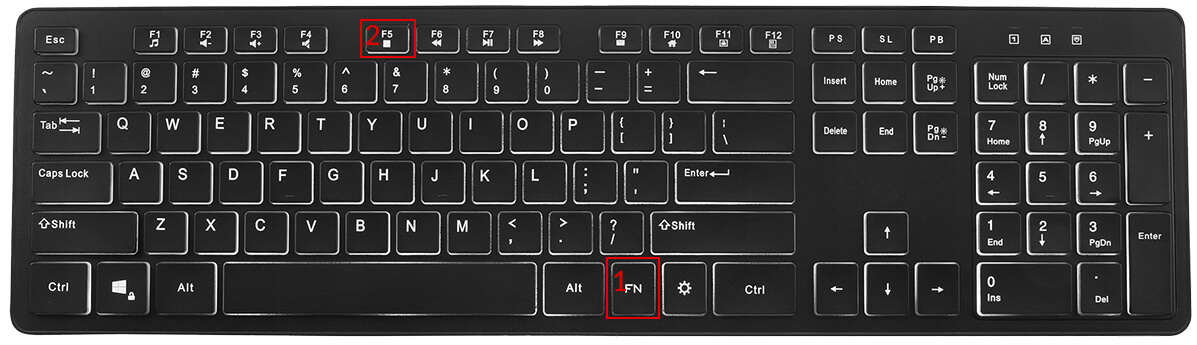
Hold down the key Fn, then press the key F5
Repeat this action at least 3 times
IN THE OPERATING SYSTEM:

For the Safari browser:
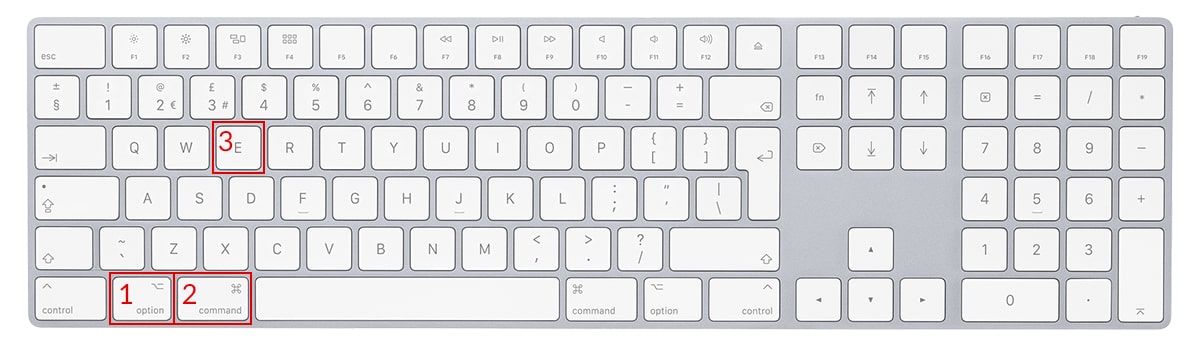
Hold down the key Option + Cmd(Command), then press the key E Repeat this action at least 3 times
For the Chrome, Firefox, Opera, Edge browser:
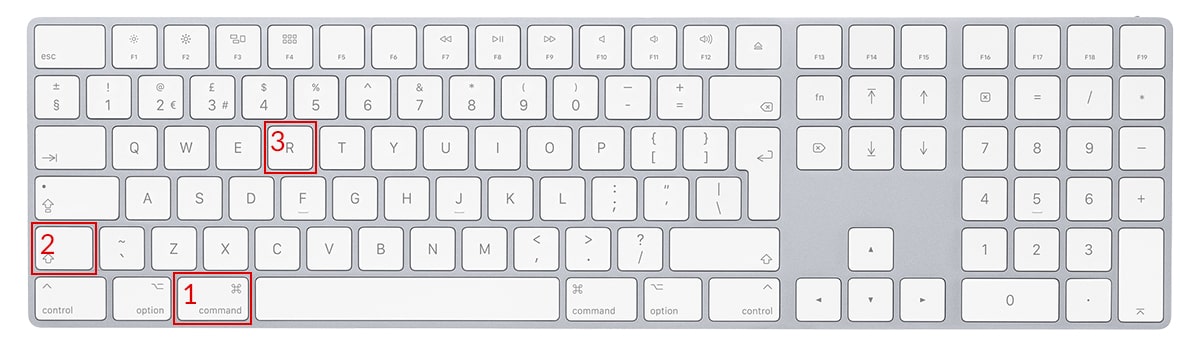
Hold down the key Cmd(Command) + Shift, then press the key R Repeat this action at least 3 times
Since the beginning of 2014, all entrepreneurs document transactions with invoices. VAT-exempt entrepreneurs could issue simplified invoices as early as 2013 after registering their exemption with the Tax Office on form VAT-R.
Under the rules effective from 1 January 2014, VAT payers issue VAT invoices, while entrepreneurs using a subjective or objective exemption issue simplified invoices.
A simplified invoice is a sales document without some elements of a standard document. It may be issued only when the total gross value does not exceed PLN 450 or EUR 100.
A simplified VAT invoice contains less information than a traditional VAT invoice and facilitates low-value settlements between entrepreneurs. It need not include:
It resembles a receipt, but is a valid accounting document if it contains data enabling the tax value for each VAT rate to be determined. It must include:
You can create a reusable simplified-invoice template in the afaktury.pl online invoicing application.
Using the Internet to issue and email a simplified invoice is easy, fast and effective. afaktury.pl is designed for everyone who saves time and money.
From 2014, rules on compulsory elements of invoices for VAT-exempt sales were simplified. The first case is a subjective exemption based on annual sales of up to PLN 150,000. The invoice must contain at least:
The second case is an objective exemption based on the type of sale, such as medical, legal or advisory services, except financial intermediation and insurance. The invoice contains the same details and additionally the basis for the VAT exemption with a reference to the specific provision of the VAT Act.
The third case covers financial intermediation, insurance and similar services. The invoice must contain the issue date and number, names and addresses of seller and buyer, service name and amount payable.
Invoices issued by businesses exempt because of the turnover limit and by financial or insurance service providers do not differ from bills in their information content.
Objectively exempt taxpayers must remember to state the legal basis for the VAT exemption on the simplified invoice.
Entrepreneurs who want to issue a sales document quickly and efficiently may choose this form for transactions up to PLN 450.
There are no restrictions based on business status: both small taxpayers and other business owners may use them. However, the nature of a transaction may prevent their use.
Simplified invoices are not used for:
A simplified invoice allows the buyer to deduct VAT; it is worth informing the customer because the document strongly resembles a receipt.
Their introduction facilitates tax settlements, although every change to invoicing or tax accounting requires sellers and buyers to change their habits.
Accounting and invoicing systems must also be adapted. afaktury.pl is ready for such changes and has supported sales documents under the new rules since the first day of 2014.
Simplified invoices will not replace traditional VAT invoices. In law they are treated as VAT invoices, so buyers may deduct VAT on their basis.
For small transactions they reduce the seller's burden of preparing documents.
Polish tax law adapted to EU directives offers many benefits to entrepreneurs documenting daily transactions with VAT invoices.
An invoice is issued within 7 days of delivery or performance, when the tax obligation arises, and no earlier than 30 days before that obligation.
For continuous sales it is issued no later than the seventh day after the end of the sales month and states only the month and year.
For several separate deliveries or services during a month it must be issued by the last day of that month.
If all or part of the payment is received in advance and creates a tax obligation, the invoice is issued within 7 days of receipt.
An advance payment creates a VAT obligation and must be documented with a simplified invoice, just like a traditional VAT invoice.
Invoices are issued in two copies: one for the buyer and one retained by the seller. More copies may be prepared if necessary.
For electronic invoices, the seller or an authorised person sends or otherwise makes the document available electronically to the buyer.
Under § 20a(1) of the regulation, the taxpayer must determine how authenticity of origin, integrity of content and readability are ensured.
These qualities may be ensured by any business controls establishing reliable content and an audit trail.
Issued and received simplified invoices, including corrections and duplicates, must be archived by settlement period so that they can be found easily.
At the request of a tax authority or fiscal-control authority, taxpayers must provide access in accordance with separate regulations.
Electronic invoices must also be reproducible, downloadable and processable without delay so their data can be inspected (§ 21(4) of the invoicing regulation).
Since 1 January 2014, the easiest way to issue and store simplified invoices is afaktury.pl.
The scheme depends on whether the taxpayer has a subjective or objective exemption. The document always has a date and number, seller and buyer names or tax identifiers (NIP), description, measure and quantity of goods or services, unit price and total amount.
For the subjective exemption based on the PLN 150,000 annual limit, these details are sufficient.
For an objective exemption based on the type of sale, such as lawyers, doctors or architects, the legal basis for exemption must also be shown.
For insurance and financial intermediaries, the simplest form contains the date and number, names of seller and buyer, service name and amount payable.
afaktury.pl guides users through the fields. A sample may additionally show VAT rates and amounts: