IN THE OPERATING SYSTEM:

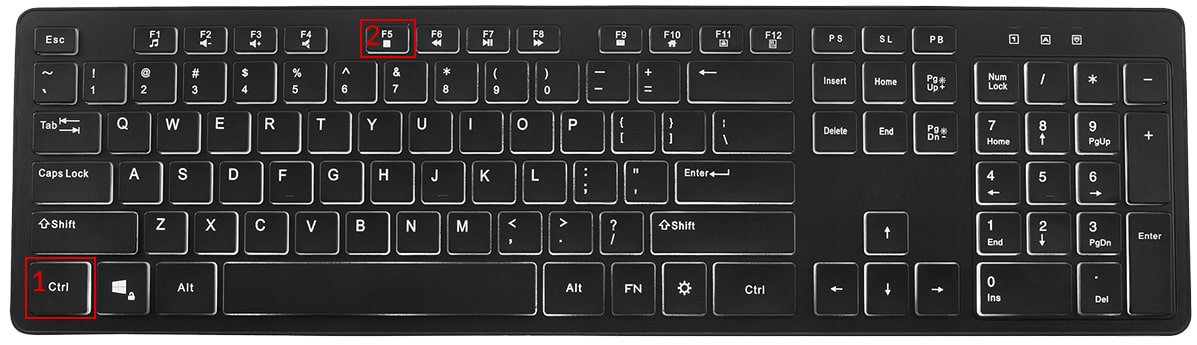
Hold down the key Ctrl, then press the key F5 Repeat this action at least 3 times
If this option does not work, try:
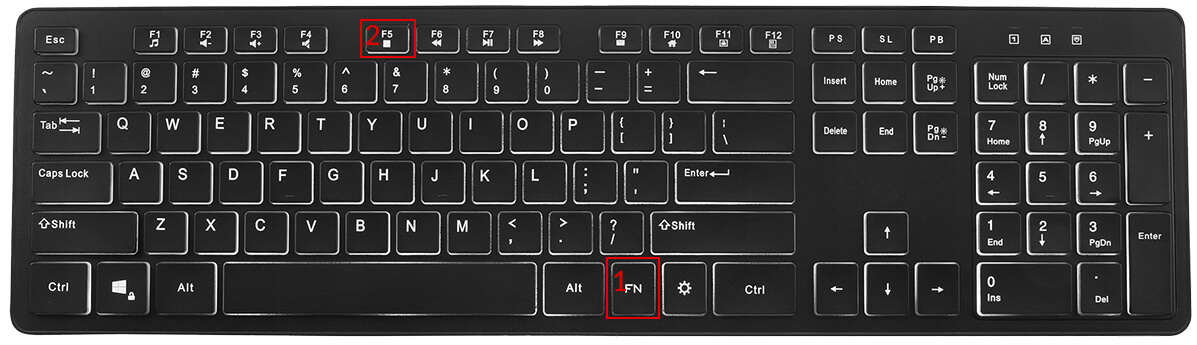
Hold down the key Fn, then press the key F5
Repeat this action at least 3 times
IN THE OPERATING SYSTEM:

For the Safari browser:
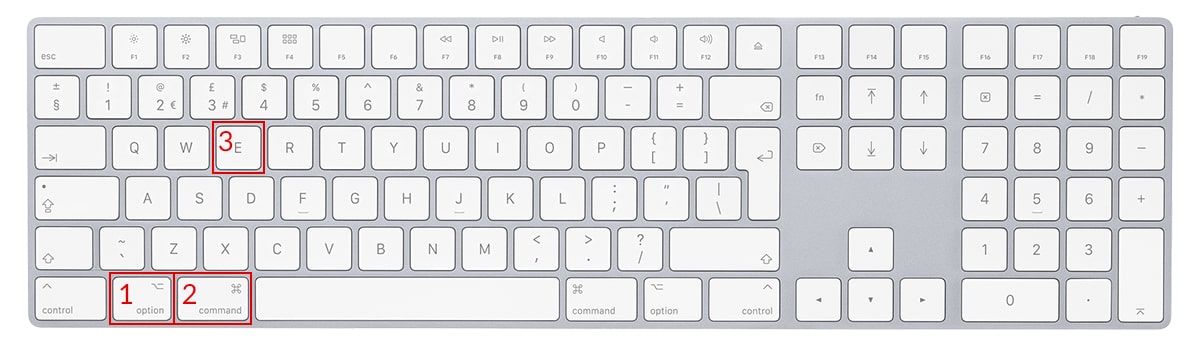
Hold down the key Option + Cmd(Command), then press the key E Repeat this action at least 3 times
For the Chrome, Firefox, Opera, Edge browser:
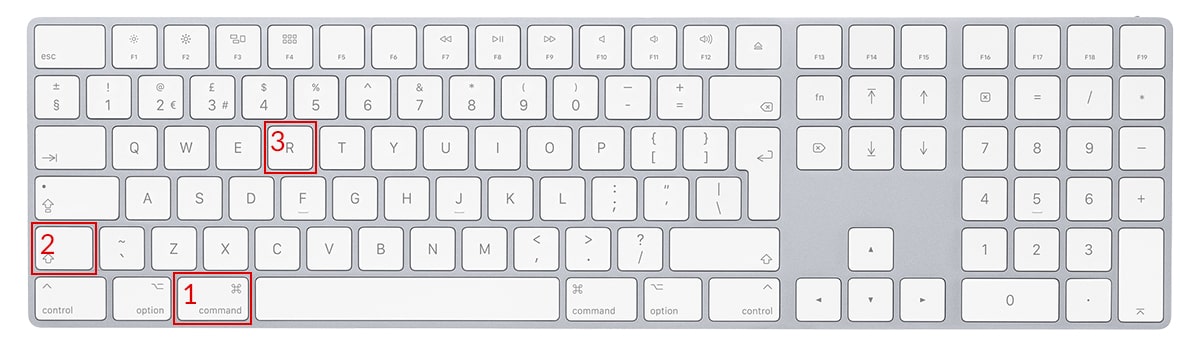
Hold down the key Cmd(Command) + Shift, then press the key R Repeat this action at least 3 times
A foreign-currency invoice is an accounting document similar to a standard VAT invoice, except that it is issued in a foreign currency. Foreign-currency invoices are issued by businesses that make payments in foreign currencies.
Businesses may issue invoices documenting domestic transactions whose values are expressed in a currency other than the Polish currency. However, the resulting VAT amount must be expressed in the domestic currency.
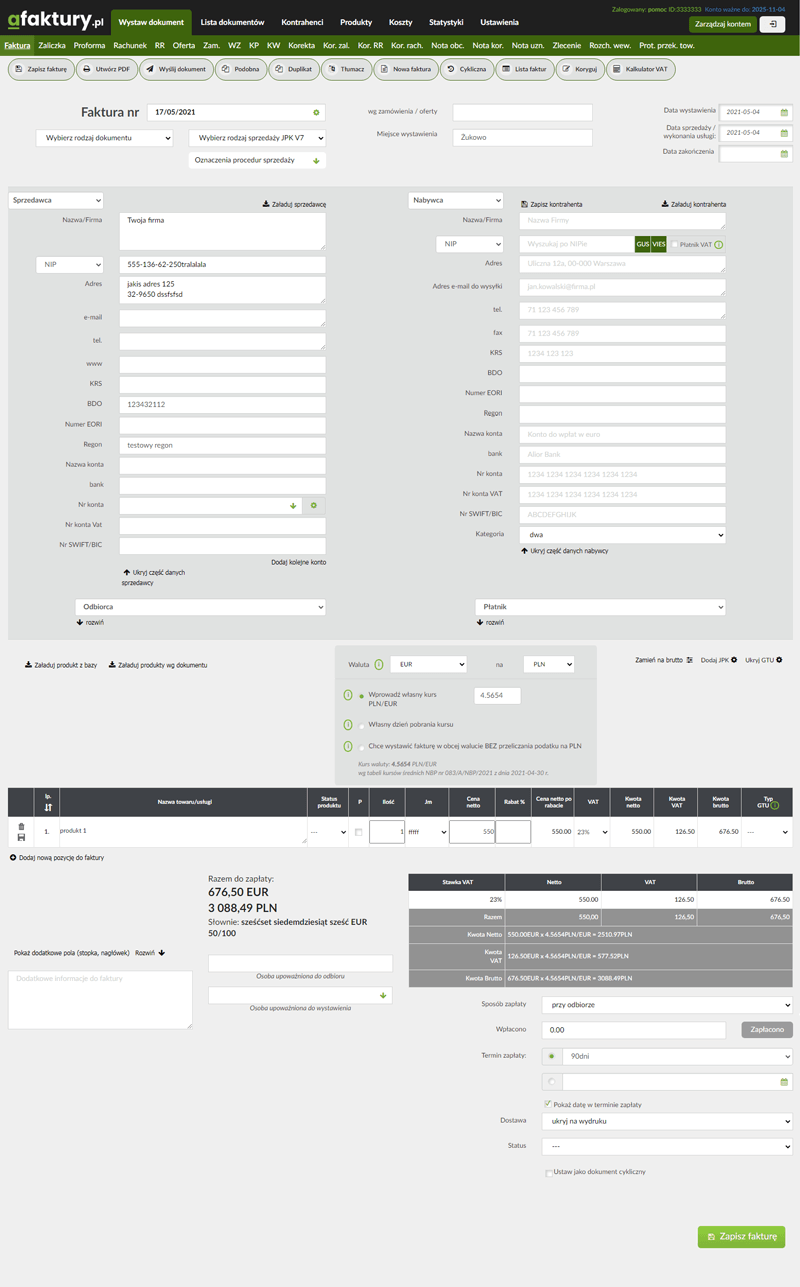
You can easily issue a foreign-currency invoice in afaktury.pl, as this intuitive, user-friendly and simple application automatically converts foreign currencies and calculates the VAT amount in Polish currency in accordance with the regulations.
VAT regulations allow VAT invoices to be issued in foreign currencies. This means that almost all invoice amounts, including net and gross unit prices and net and gross values, may be expressed in another country's currency.
If a business has a foreign-currency business loan or pays for services or products in a foreign currency because this is more advantageous and the contractor agrees, there is nothing to prevent settlement in this way.
However, VAT must be stated in Polish zlotys regardless of the currency of the invoice, so the appropriate conversion must be made.
When issuing a VAT invoice in a foreign currency, the taxpayer must know the rules for converting foreign currencies into Polish zlotys. They are set out in the Value Added Tax Act. Since 1 January 2014, the average exchange rate announced by the NBP for the last business day before delivery of the goods or performance of the service has applied.
When a transaction is documented by a VAT invoice issued within the proper deadline, conversion into zlotys is made using the average rate for the foreign currency announced by the National Bank of Poland on the last business day preceding the delivery/performance date.
Similar conversion applies when an invoice is issued after the deadline: the taxpayer must convert the amount into Polish zlotys using the average rate announced by the National Bank of Poland for the last business day preceding the date on which the tax obligation arose.

Since Polish entities are free to settle accounts in foreign currencies, there is nothing to prevent invoices for domestic customers from being issued in a foreign currency.
Such a document should contain data identifying the invoice and the parties to the transaction:
In the last two cases referred to in Article 97(10)(2) and (3) of the VAT Act, the number includes the two-letter code used for value added tax in the relevant Member State. A foreign-currency invoice should contain delivery details and VAT rates and amounts, such as:
It should be reiterated that regardless of the currency in which the invoice amount due is stated, the VAT amount is shown in Polish zlotys.
Valuation of an invoice expressed in a foreign currency — current valuation under the Accounting Act
The conversion of foreign-currency transactions into Polish zlotys is governed by Article 30(2) of the Accounting Act. Receivables and liabilities in foreign currencies are entered in the accounts after conversion at the average NBP rate announced for the currency on the day preceding their origination, usually the sales or purchase invoice date.
Foreign-currency revenue is converted into Polish zlotys using the average foreign-exchange rate announced by the NBP on the last business day preceding the date on which the revenue was earned.
The date on which revenue arises is the date of delivery of an item, transfer of a property right, performance of a service or partial performance of a service.
Costs incurred in foreign currencies are converted into Polish zlotys using the average NBP rate from the last business day preceding the date on which the cost was incurred.
The taxable amount is converted using the average rate for the foreign currency announced by the NBP on the last business day preceding the date on which the tax obligation arose.
The taxpayer may instead convert these amounts into zlotys using the latest exchange rate published by the European Central Bank on the last day preceding the date on which the tax obligation arose.
When using ECB exchange rates, currencies other than the euro must be converted using each currency's exchange rate against the euro.
Since 1 January 2014, foreign-currency invoices have been converted into zlotys at the exchange rate from the business day preceding the VAT tax point. This is the business day before the delivery of the goods or performance of the service.
For income-tax purposes exchange differences relate to net costs or revenue, while exchange differences calculated under the Accounting Act include gross amounts, including VAT.
Exchange differences relating to input or output VAT that are recorded in the accounting books are not tax-deductible costs or taxable revenue.
An exception applies to entities that determine exchange differences under accounting regulations. Their cost or revenue includes exchange differences calculated on the entire gross liability, including VAT.
This means that differences determined for accounting purposes are also settled as taxable revenue and costs. This treatment is confirmed by the tax authorities.
For foreign-currency invoices issued before delivery, including advance invoices or invoices issued up to 30 days before delivery, the correct conversion rate is the rate from the day before the invoice was issued. It cannot be the rate before delivery, because that future rate is unknown on the invoice date.
There are four situations when preparing a foreign-currency invoice:
First, the simple case where the invoice is issued on the same day as all deliveries or services. All items are converted into PLN at the rate from the preceding day.
Second, where the invoice is issued on a different day from all deliveries or services. All items use the same rate: the rate from the day before delivery or performance.
Third, the most complex case, where the invoice combines deliveries or services from different days. Individual items use the rate from the day before their delivery or performance, so as many rates are used as there are delivery or service dates.
Fourth, where the invoice is issued before delivery or performance. It is converted at the rate from the day before issue because the future rate is not known on the invoice date.
A foreign-currency invoice is simply a standard VAT invoice with the transaction amount in a foreign currency and the VAT amount in Polish currency. If goods sold to a Polish customer are settled in euros, the amount due in euros must be accompanied by the tax amount converted into zlotys.
For foreign-currency invoices, remember the rule for converting foreign-currency amounts into Polish zlotys. For tax purposes, such amounts are converted at the average rate announced by the NBP on the last business day preceding the date on which the tax obligation arose.
A foreign-currency invoice is easy to issue, as you can see by using the afaktury.pl application. Complete all fields in the relevant tab and the application will automatically convert the amounts into the appropriate currency and retrieve the current average NBP rate compliant with the regulations.
Issue a foreign-currency invoice